
Wharton Risk Center Presents "Climate Prof"
Watch the video recordings by clicking here.
Inspired by “Iron Chef” and Wharton’s own “Iron Prof” events, this special event will take place during Penn’s Climate Week to showcase the climate-related research of Wharton faculty. Join us to hear from ten Wharton professors who will each present their cutting-edge research on climate and business in five minutes or less. This event is hosted by the Business, Climate and Environment Lab at the Wharton Risk Center.
Participating Faculty:
- Mike Abito, Assistant Professor of Business Economics & Public Policy
- Arthur van Benthem, Associate Professor of Business Economics & Public Policy
- Brian Berkey, Assistant Professor of Legal Studies & Business Ethics
- Susanna Berkouwer, Assistant Professor of Business Economics & Public Policy
- Mirko Heinle, Associate Professor of Accounting
- Vit Henisz, Deloitte & Touche Professor of Management
- Ben Keys, Rowan Family Foundation Professor of Real Estate
- Carolyn Kousky, Executive Director, Wharton Risk Center
- Sarah Light, Associate Professor of Legal Studies & Business Ethics
- Luke Taylor, Associate Professor of Finance
Speakers
Mike Abito
Mike Abito is Assistant Professor of Business Economics & Public Policy at Wharton. His main areas of specialization are Industrial Organization, Regulation and Environmental Economics. He is interested in studying how government policies and regulations interact with markets and affect behavior of firms, and how this interaction impacts social welfare. Mike received his PhD in Economics from Northwestern University. Prior to his doctoral studies, he attended the Toulouse School of Economics and the National University of Singapore.

Arthur van Benthem
Arthur van Benthem is an Associate Professor of Business Economics and Public Policy at Wharton. His research specializes in environmental and energy economics. His recent work studies the unintended consequences of environmental legislation and the economic efficiency of energy policies. His current research focuses on markets for transportation, renewable energy, and carbon allowances. Arthur serves as one of two Faculty Co-Leaders of the Business, Climate and Environment Lab at the Wharton Risk Center.

Brian Berkey
Brian Berkey is an Assistant Professor in the Legal Studies and Business Ethics Department. He has a PhD in Philosophy, and his research focuses on issues such as moral demandingness, distributive justice, climate change, exploitation, and effective altruism. He is currently working on papers on autonomous vehicle ethics, workplace hierarchy, and ethical limits on wealth accumulation.

Susanna Berkouwer
Susanna Berkouwer is an Assistant Professor of Business Economics & Public Policy at the Wharton School of the University of Pennsylvania whose research focuses on environmental economics and development economics. Their current research projects include energy efficiency adoption, the economic impacts of power outages, the political economy of infrastructure construction, insurance against extreme weather, and carbon taxes under credit market failures. Susanna teaches Microeconomics for Managers in the Wharton MBA program, and is affiliated with Wharton’s Business, Climate, and Environment Lab, Analytics at Wharton, and the Penn Development Research Initiative. Susanna holds a PhD from UC Berkeley, an MA from Yale University, and a BSc from the University College London.

Mirko Heinle
Mirko Heinle teaches Managerial Accounting in the undergraduate program. He joined the Wharton School in 2011 after receiving his doctoral degree from the University of Mannheim, Germany. Mirko’s research interests concern accounting disclosure in capital markets, the regulatory process of such disclosure, and internal capital allocation. Current research includes the disclosure of risk related information, the effect of regulatory uniformity on lobbying incentives, and the optimal allocation of non-monetary resources.

Vit Henisz
Witold J. Henisz is the Deloitte & Touche Professor of Management at the University of Pennsylvania’s Wharton School where he also serves as Director of the Political Risk Lab at the Wharton Risk Center and has founded the Wharton ESG Analytics Lab. His research examines the impact of political hazards as well as environmental, social, and governance factors more broadly on the strategy and valuation of global corporations. He has won multiple teaching awards and teaches extensively on the topic of Corporate Diplomacy and ESG integration in executive education programs. He is currently a principal in the consultancy PRIMA LLC whose clients span multinational firms, asset managers, intergovernmental organizations, and non-governmental organizations.
Ben Keys
Benjamin J. Keys is the Rowan Family Foundation Professor of Real Estate and Finance at the University of Pennsylvania’s Wharton School. He studies issues related to household finance, mortgage finance, real estate, applied econometrics, labor economics, and urban economics. Prior to joining the faculty of the Wharton School, Keys taught at the Harris School of Public Policy and co-directed the Kreisman Initiative on Housing Law and Policy at the University of Chicago. Previously, he worked as a staff economist at the Board of Governors of the Federal Reserve System in the Division of Research and Statistics. Keys is a Faculty Research Fellow of the National Bureau of Research, a member of the Academic Research Council of the Housing Finance Policy Center at the Urban Institute, and a Faculty Fellow of the Center for Financial Security at the University of Wisconsin-Madison. He received a BA in Economics and Political Science from Swarthmore College and an MA and PhD in Economics from the University of Michigan.

Carolyn Kousky
Carolyn Kousky is Executive Director at the Wharton Risk Management and Decision Processes Center at the University of Pennsylvania, where she also directs the Policy Incubator. Dr. Kousky’s research examines multiple aspects of disaster insurance markets, disaster finance, climate risk management, and policy approaches for increasing resilience. She has published numerous articles, reports, and book chapters on the economics and policy of climate risk and disaster insurance markets, and is routinely cited in media outlets including NPR, The New York Times, and The Financial Times, among many others. She is the recipient of the 2013 Tartufari International Prize from the Accademia Nazionale dei Lincei. She is the vice-chair of the California Climate Insurance Working Group, a university fellow at Resources for the Future, a non-resident scholar at the Insurance Information Institute, and a member of the Roundtable on Risk and Resilience of Extreme Events at the National Academies of Sciences, Engineering, and Medicine. She has a BS in Earth Systems from Stanford University and a PhD in Public Policy from Harvard University.
Sarah Light
Sarah E. Light is an Associate Professor of Legal Studies & Business Ethics, where her research and teaching focus on the intersection of environmental management, corporate sustainability, and environmental law. Recent articles have examined the role that major banks can play in private climate governance, whether and under what circumstances it is possible to insure a coral reef, and what limits (if any) the First Amendment places on corporate green marketing claims. She serves as one of two Faculty Co-Leaders of the Business, Climate and Environment Lab at the Wharton Risk Center. Professor Light is the recipient of numerous teaching awards in both the undergraduate and MBA programs. She holds an A.B. from Harvard University, a J.D. from Yale Law School, and an M. Phil from Oxford University, where she was a Rhodes Scholar.
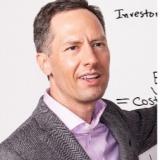
Luke Taylor
Luke Taylor has been a finance professor at Wharton since 2008. His primary areas of research are empirical corporate finance and asset management. His research focuses on three main themes: sustainable investing, structural estimation in corporate finance, and understanding the skill of important financial actors like CEOs and active fund managers. Professor Taylor is an associate editor at the Journal of Financial Economics and the Review of Finance.